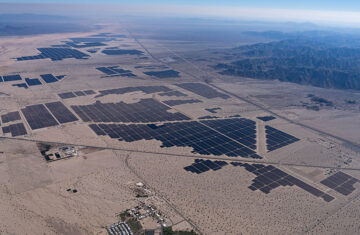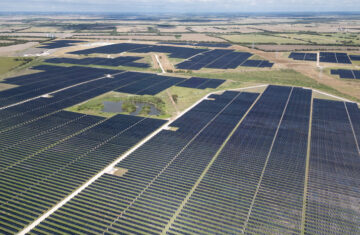

Rising from the West Texas plains, the OCI Alamo 7 Solar Farm represents the rapid expansion of renewable energy in America’s traditional oil and gas heartland, demonstrating how regions with deep fossil fuel roots are embracing solar power to diversify their energy economy and tap into new revenue streams. This project exemplifies Texas’ emerging “all-of-the-above” energy strategy, where renewable projects increasingly complement rather than compete with traditional energy production.
Significance & Context
Developed by OCI Solar Power, the 110-megawatt (MW) Alamo 7 Solar Farm contributes to Texas’ position as a national leader in renewable energy generation. According to data from the Electric Reliability Council of Texas (ERCOT), the facility generates enough electricity to power approximately 33,000 homes, adding to the grid diversity that has become increasingly important following Texas’ grid reliability challenges. Its location in Haskell County, within the West Texas wind and solar corridor, positions it to leverage existing transmission infrastructure while providing local economic benefits to a region experiencing agricultural transition.
Development Timeline
The project’s development progressed rapidly, reflecting Texas’ streamlined permitting process for renewable energy. Development activities began in 2019, with construction commencing in 2021 following power purchase agreements with municipal utilities and commercial off-takers. The project achieved commercial operation in 2023, as documented in ERCOT Generation Interconnection Queue reports. This accelerated timeline demonstrates the efficiency of Texas’ market-based approach to renewable development, though it still required thorough environmental review and community consultation.
Technology & Innovation
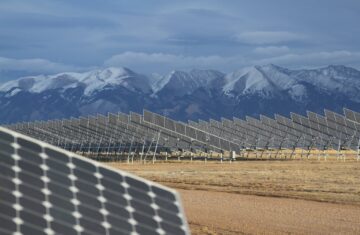
Alamo 7 Solar Farm utilizes single-axis tracking systems with monocrystalline silicon panels, optimized for West Texas’ high solar irradiance conditions. The project incorporates advanced inverters with reactive power capability, providing valuable voltage support to the local grid—a crucial feature in rural areas with long transmission lines. According to performance data from the National Renewable Energy Laboratory (NREL), the tracking technology increases energy production by approximately 25% compared to fixed-tilt systems. The project also features a specialized foundation design that minimizes soil disturbance and allows for easier land restoration.
Challenges & Controversies
The project faced challenges related to land use competition and concerns about impacts on local agriculture. Some community members expressed apprehension about converting agricultural land to industrial use and potential effects on property values. The resolution involved implementing an Agricultural Compatibility Plan developed with Texas A&M AgriLife Extension, which included maintaining grazing operations beneath and around panels, using sheep for vegetation management, and designing the system to allow eventual return to full agricultural use. The project also addressed water usage concerns by employing automated, water-free cleaning systems that use air pressure and rotating brushes.
Community & Economic Impact
For Haskell County, the project has delivered meaningful economic benefits while preserving agricultural traditions. During construction, the project typically employed 200-250 workers, with efforts to hire locally where possible. For ongoing operations, it maintains 4-6 permanent positions. Based on Haskell County’s tax assessment models, the project likely contributes approximately $300,000-$400,000 annually in property tax revenue to local governments and school districts. Additionally, it provides stable lease payments to local landowners, creating a drought-resistant income source that complements rather than replaces agricultural operations, helping to sustain family farms through economic variability.
Future Outlook
With an expected operational lifespan of 30+ years, the OCI Alamo 7 Solar Farm represents a long-term economic asset for Haskell County. The project’s success demonstrates how renewable energy can provide economic stability in agricultural regions facing climate and market uncertainties. As Texas’ grid continues to evolve, the project’s location within the competitive ERCOT market positions it well to benefit from future price signals favoring flexible, zero-marginal-cost generation. The project’s approach to balancing solar development with agricultural preservation provides a model for other rural communities seeking to diversify their economies while maintaining their agricultural heritage, contributing to a more resilient energy and agricultural future for West Texas.