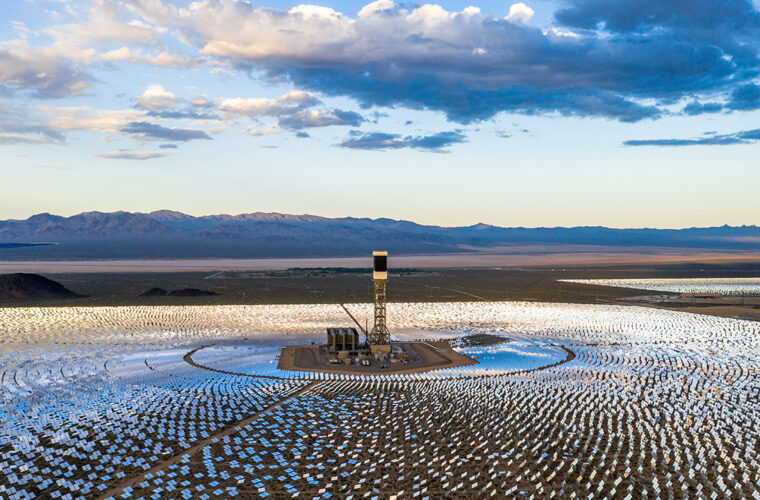
In the vast, sunbaked expanse of the Mojave Desert, the Ivanpah Solar Electric Generating System presents a stunning visage: thousands of mirrored heliostats focused on three centralized power towers, creating beams of light visible from space. This 392-megawatt facility, jointly owned by BrightSource Energy, NRG Energy, and Google, is not merely a power plant but a landmark of audacious engineering and a critical, though complex, chapter in the story of American renewable energy. Operational since 2014, Ivanpah was the largest concentrating solar power (CSP) plant in the world at its inception and remains a singular testament to the potential and challenges of utility-scale thermal solar technology.
Developed with an investment of approximately $2.2 billion—which included a $1.6 billion federal loan guarantee from the U.S. Department of Energy Loan Programs Office—the project’s scale was monumental. Its construction, led by Bechtel, created over 1,000 jobs at its peak and required meticulous logistical planning to mitigate its impact on the sensitive desert tortoise habitat, a process that became a case study in balancing green energy goals with environmental conservation. Unlike commonplace photovoltaic farms, Ivanpah uses 173,500 heliostats to focus sunlight to boil water in the towers, creating steam to drive turbines. This technology, detailed in reports by the National Renewable Energy Laboratory (NREL), was chosen for its ability to provide dispatchable power; through inherent thermal inertia, it can better manage shifts in cloud cover and continue generating electricity into the early evening, aligning with California’s peak demand periods.
The facility generates enough electricity to power approximately 140,000 homes, offsetting over 400,000 tons of carbon dioxide annually. However, its community and environmental impact has been nuanced. While it provides significant tax revenue to San Bernardino County and created enduring operations jobs, its water usage for steam condensation and its specific environmental footprint sparked important debates that have informed subsequent large-scale solar development in desert regions, leading to a greater emphasis on dry-cooling technology and careful site selection, as encouraged by the California Energy Commission’s siting guidelines.
Ivanpah’s future is intrinsically linked to innovation. While not a candidate for repowering in the traditional sense, its value to grid reliability is unique among solar assets. Its ability to synchronize with the grid and provide inertia is a quality most PV plants lack. As California’s grid leans more heavily on intermittent renewables, the value of such dispatchable, firm capacity—potentially enhanced by retrofitting with thermal storage or green hydrogen co-firing—could grow, ensuring this monumental project remains a cornerstone of the state’s clean energy strategy.